Rush E Piano Sheet Music PDF Free: A Comprehensive Guide
Rush E, a C major piano piece by Andrew Wrangell, blends Soviet aesthetics and Tetris elements. Free PDF sheet music availability is sought online, though caution regarding source legitimacy is advised.
Understanding the Origins of “Rush E”
Rush E isn’t tied to the band Rush, but originates from the work of composer and performer Andrew Wrangell. Emerging in online communities around November 2024, the piece quickly gained traction. It’s a piano composition in C major, notable for its unique stylistic blend. Influences include a distinct Soviet aesthetic and recognizable elements reminiscent of the classic video game, Tetris.
The song’s rise is largely attributed to its spread through online platforms, captivating listeners with its unusual soundscape. Finding readily available, free PDF sheet music has become a popular pursuit for pianists eager to learn this intriguing piece.
The Composer: Andrew Wrangell
Andrew Wrangell is the creative force behind “Rush E,” a captivating piano composition gaining popularity online. Unlike associations with the band Rush, Wrangell independently composed and performs this piece. Details regarding his broader musical background remain relatively scarce, contributing to the mystique surrounding “Rush E.”
His work demonstrates a unique ability to blend diverse influences, notably the Soviet aesthetic and the iconic sounds of Tetris. Wrangell’s composition has spurred a demand for accessible sheet music, with many seeking free PDF versions to learn and perform his distinctive style.
Musical Style and Influences
“Rush E” distinguishes itself through a compelling fusion of musical styles. The composition prominently features a distinctly Soviet aesthetic, evoking a sense of nostalgia and perhaps even a touch of melancholy. This is cleverly interwoven with elements directly inspired by the classic video game Tetris, creating a surprisingly harmonious blend.
The piece, written in C major, possesses a unique character that resonates with listeners. Wrangell’s stylistic choices contribute to the growing demand for “Rush E” piano sheet music, allowing musicians to explore and replicate its intriguing soundscape.
Soviet Aesthetic in “Rush E”
The incorporation of a Soviet aesthetic within “Rush E” is a defining characteristic, setting it apart from typical piano compositions. This isn’t merely a superficial stylistic choice; it’s deeply embedded within the harmonic and melodic structures of the piece. The resulting sound evokes a specific atmosphere, hinting at a bygone era and a particular cultural sensibility.
This unique aesthetic contributes significantly to the piece’s appeal, driving interest in finding “Rush E” piano sheet music. Musicians are drawn to the challenge of recreating this evocative sound, further popularizing Wrangell’s work.
Tetris Elements and Composition
The influence of Tetris on “Rush E’s” composition is a fascinating aspect of Andrew Wrangell’s work. While not a direct transcription of Tetris music, the piece incorporates rhythmic and melodic ideas reminiscent of the iconic game. This connection adds a layer of nostalgia and playful complexity to the composition.
The search for “Rush E” piano sheet music is often fueled by a desire to understand and replicate these subtle Tetris-inspired elements. Players appreciate the clever integration of gaming culture into a sophisticated piano piece, making it a popular choice.
Finding Free PDF Sheet Music Online
Locating free PDF sheet music for “Rush E” requires diligent searching. Numerous websites claim to offer free scores, but verifying their legitimacy is crucial. Many piano enthusiasts actively seek downloadable versions to learn this popular piece by Andrew Wrangell. However, be aware that quality can vary significantly.
Online communities and forums dedicated to piano music often share resources. Exercise caution when downloading from unverified sources to avoid potential malware or inaccurate transcriptions. Always scan downloaded files before opening them.
Legitimate Sources for Free Sheet Music
Finding truly legitimate free sheet music for “Rush E” can be challenging, as Andrew Wrangell’s work isn’t widely available through traditional channels. Websites offering public domain or Creative Commons licensed music are a good starting point, though “Rush E” likely won’t be found there.
Some composers occasionally release free scores on their personal websites or platforms like MuseScore. Checking piano-focused forums and communities for shared links from trusted members is also advisable. Be wary of sites promising “free” music that require extensive registration or downloads.
Potential Risks of Downloading from Unverified Sites
Downloading “Rush E” sheet music from unverified websites carries significant risks. These sites often host malware, viruses, or potentially unwanted programs disguised as PDF files. Your device could be compromised, leading to data theft or system damage.
Furthermore, many such sites violate copyright laws, offering illegally distributed material. Downloading copyrighted sheet music without permission is unethical and potentially illegal. Always prioritize reputable sources and exercise extreme caution when encountering offers that seem too good to be true, protecting your digital security.
Sheet Music Difficulty Level
Determining the precise difficulty of “Rush E” piano sheet music proves challenging due to limited official grading. However, its composition, blending Soviet aesthetics and Tetris influences, suggests a moderate to advanced level. The piece likely demands proficient technique, including accurate rhythm and dynamic control.

Players should anticipate complex passages and potentially fast tempos. While accessible to intermediate pianists with dedication, mastering “Rush E” requires a solid foundation in piano fundamentals and a willingness to tackle challenging musical phrases.
Assessing the Technical Challenges
“Rush E” presents several technical hurdles for pianists; The piece’s unique stylistic blend—Soviet aesthetic meets Tetris—likely incorporates unusual harmonies and rhythmic patterns. Expect demanding fingerwork, potentially including rapid scales or arpeggios, and precise coordination between hands.
Successfully navigating the sheet music requires strong sight-reading skills and the ability to quickly adapt to unfamiliar musical structures. Players should prepare for sections demanding stamina and control, alongside nuanced dynamic expression to capture the piece’s distinctive character.
Suitable Skill Level for Players
Determining the appropriate skill level for “Rush E” is challenging due to limited publicly available information regarding its difficulty. However, considering its complex stylistic influences—Soviet aesthetics and Tetris elements—it’s likely best suited for intermediate to advanced pianists.
Beginners may struggle with the piece’s potentially unconventional harmonies and rhythmic intricacies. A solid foundation in piano technique, including scale proficiency and chord voicing, is recommended. Players comfortable with sight-reading and adaptable to unique musical structures will find it more accessible.
“Rush E” in Popular Culture
“Rush E” gained traction within online communities, particularly those focused on gaming and internet culture. Its unique sound, composed by Andrew Wrangell, resonated with audiences seeking distinctive piano compositions. The piece’s association with the gaming term “Rush B,” originating from Counter-Strike: Global Offensive, further propelled its visibility.
This connection created a meme-like status, with the song frequently used in gaming montages and online videos. The unexpected blend of Soviet-inspired melodies and Tetris influences contributed to its viral spread and enduring appeal.
The Song’s Rise in Online Communities
“Rush E” experienced a significant surge in popularity through platforms like Steam and XGP, initially driven by word-of-mouth. Players organically shared the track, leading to widespread recognition despite limited traditional marketing. The song’s unique aesthetic, blending Soviet influences with Tetris elements, captivated online audiences.
Its association with gaming culture, specifically the “Rush B” tactic in Counter-Strike, amplified its reach. This organic growth culminated in over 5207 Steam reviews, boasting a 98% positive rating, demonstrating its strong community support.
Related Terms and Concepts
The term “Rush B” originates from Counter-Strike: Global Offensive, denoting a rapid, aggressive tactic focused on quickly overwhelming the B bombsite. This strategy prioritizes speed and disruption, aiming to create a numerical advantage. Interestingly, “rush” also exists as a general gaming term for swift offensives.
Linguistically, differentiating “in rush” versus “in a rush” is crucial; the former describes a state or environment (like a traffic peak), while the latter indicates urgency. These nuances highlight the complexities of English phrasing, even within gaming contexts.
“Rush B” ⎯ A Gaming Tactic
Rush B, a low-level tactic in Counter-Strike: Global Offensive, is characterized by its speed and intensity. Five terrorists rapidly advance towards the B bombsite, utilizing short-range weapons to quickly overwhelm defenders. This aggressive push exploits the map’s layout, capitalizing on the proximity of the spawn point to B.
Effectively, Rush B aims to disrupt the opposing team’s setup, creating a chaotic situation and a localized numerical advantage. It’s a high-risk, high-reward strategy often employed to break stalemates, given B’s traditionally difficult defense.
Origin in Counter-Strike: Global Offensive
The Rush B tactic originates from the competitive landscape of Counter-Strike: Global Offensive (CS:GO). It leverages the map’s design, specifically the short distance from the terrorist spawn point to the B bombsite. This proximity allows for a swift, coordinated assault, aiming to overwhelm the typically singular defender.
The strategy’s effectiveness relies on speed and surprise, disrupting the Counter-Terrorist team’s defensive positioning. Rush B became a popular, often memed, tactic due to its simplicity and potential for quick rounds, becoming a staple in lower-level play.
Strategic Implications of “Rush B”
Employing Rush B fundamentally alters the game’s tempo, forcing a rapid response from the defending team. Success hinges on coordinated execution – utilizing flashbangs and smokes to obscure vision and create advantageous engagements. However, a predictable Rush B is easily countered with pre-emptive defensive setups and well-aimed utility.
The tactic’s strength lies in its ability to disrupt enemy economy and morale. A successful rush can secure a quick round win with minimal resource expenditure. Conversely, a failed attempt can leave the terrorists vulnerable and deplete their funds, impacting subsequent rounds.
“In Rush” vs. “In a Rush” ⎯ English Language Nuances
Though subtly different, “in rush” and “in a rush” convey distinct meanings. “In rush” describes being within a hurried environment – like peak traffic. It focuses on the state or situation itself. Conversely, “in a rush” denotes personal haste or urgency; someone actively feeling pressed for time.
Consider: “He was caught in rush hour,” versus “He was in a rush to catch his train.” The former describes the surrounding chaos, while the latter highlights the individual’s frantic state. Understanding this nuance improves clarity and precision in communication.
The Band Rush and Their Discography
While unrelated to Andrew Wrangell’s “Rush E,” the Canadian progressive rock band Rush boasts an extensive and influential discography. Moving Pictures (1981) stands as a landmark album, often considered their creative peak and a defining work of the genre. It showcases their signature blend of complex instrumentation, philosophical lyrics, and Geddy Lee’s distinctive vocals.
Throughout the decades, Rush evolved, experimenting with synthesizers and diverse musical styles, yet consistently maintained a high level of musicianship. Their catalog offers a rich exploration of rock music’s possibilities.
Moving Pictures: A Landmark Album
Released in 1981, Rush’s Moving Pictures is widely regarded as their most commercially successful and artistically significant album. It’s celebrated as a cornerstone of progressive rock, showcasing the band’s exceptional musicianship and songwriting prowess. Tracks like “Tom Sawyer” and “Limelight” became enduring radio staples, blending complex arrangements with accessible melodies.
The album’s success propelled Rush to international stardom, solidifying their reputation as innovators within the rock landscape. Moving Pictures represents a pivotal moment in their evolution and remains highly influential today.
Rush’s Evolution Throughout the Decades
Rush embarked on a remarkable musical journey, evolving from early hard rock influences to complex progressive compositions. Initially mirroring Led Zeppelin, they gradually developed a unique sound characterized by Geddy Lee’s vocals and bass, Alex Lifeson’s innovative guitar work, and Neil Peart’s intricate drumming and philosophical lyrics.
Throughout the 70s and 80s, they embraced synthesizers and explored conceptual albums. In the 90s, they streamlined their sound, yet maintained their instrumental virtuosity. Their consistent dedication to musical exploration cemented their legacy.
Hi-Fi Rush: A Modern Rhythm Action Game
Hi-Fi Rush, a recent rhythm-action game, unexpectedly launched on Steam and Xbox Game Pass, gaining popularity through word-of-mouth. It uniquely blends rhythm game mechanics with action combat, synchronizing attacks to the beat of the music. The game boasts a vibrant visual style and a compelling narrative, receiving overwhelmingly positive reviews from both critics and players.
Its success demonstrates a demand for innovative gameplay experiences. The game’s integration of music and action creates a highly engaging and satisfying experience, proving a hit with gamers.
Gameplay Mechanics and Music Integration
Hi-Fi Rush’s core gameplay revolves around timing attacks to the beat of the music. Successful synchronization amplifies damage and unlocks special abilities, creating a fluid and dynamic combat system. The game features a diverse soundtrack spanning various genres, seamlessly integrated into every aspect of the experience.
Players must master rhythmic precision to overcome challenges, with the music acting as both a guide and a reward. This innovative approach elevates the action genre, offering a uniquely immersive and satisfying experience for players.
Critical Reception and Player Feedback
Hi-Fi Rush garnered overwhelmingly positive reviews upon its surprise release, achieving a 98% rating on Steam based on over 5207 user reviews as of today, March 8, 2026. Critics lauded its innovative blend of rhythm-action and combat, praising the seamless music integration and engaging gameplay.
Players consistently highlight the game’s vibrant art style, catchy soundtrack, and satisfying sense of progression. The unexpected launch and reliance on word-of-mouth marketing contributed to its cult following and widespread acclaim within the gaming community.
The Film “Rush” (2013)
The 2013 film “Rush” dramatically portrays the intense rivalry between Formula One drivers James Hunt and Niki Lauda during the 1976 season. While lauded for its thrilling race sequences and compelling performances, the film takes dramatic license with historical events for narrative effect.
Detailed examination of the film reveals factual inaccuracies regarding specific incidents and character portrayals. Despite these deviations, “Rush” successfully captures the dangerous and glamorous world of 1970s Formula One racing, appealing to both motorsport enthusiasts and general audiences.
Historical Accuracy and Dramatic License
The film “Rush” (2013), while captivating, employs significant dramatic license. Detailed scrutiny reveals alterations to events surrounding James Hunt and Niki Lauda’s 1976 rivalry. Some incidents are compressed or re-ordered for narrative pacing, and character interactions are embellished.
Despite these deviations from factual accuracy, the core essence of their competition remains intact. The film prioritizes compelling storytelling over strict adherence to historical detail, aiming for a heightened emotional impact. Viewers should approach “Rush” as a dramatization inspired by true events, not a documentary.
Focus on Formula One Racing
The film “Rush” meticulously recreates the atmosphere of 1970s Formula One racing. It showcases the inherent dangers of the sport during that era, with minimal safety precautions and high-speed crashes being commonplace. The depiction of trackside conditions, pit stops, and racing strategies provides a glimpse into the challenges faced by drivers and teams.
Beyond the racing itself, the film explores the glamorous lifestyle and intense rivalries that characterized Formula One. It highlights the dedication, skill, and courage required to compete at the highest level, captivating audiences with the thrill of speed and competition.
Controversial Associations with “Rush”
The term “rush,” outside of musical or gaming contexts, carries unfortunate associations with recreational drug use, particularly within certain communities. It’s described as a substance used for its purported euphoric and sexual enhancement effects, popular among young men. This association presents significant health risks, including the spread of HIV through male sexual activity.
Discussions surrounding “rush” often highlight the dangers of unregulated substances and the importance of safe practices. The term’s dual meaning necessitates awareness and responsible communication to avoid inadvertently promoting harmful behaviors or minimizing the associated risks.
Recreational Drug Use and Associated Risks
The term “rush” unfortunately connects to recreational drug use, specifically within certain social circles, described as a substance inducing euphoria and sexual effects, popular among young men. This carries substantial health risks, notably the increased transmission of HIV through male sexual contact. Usage often involves relaxing muscles, potentially leading to inconsistent protection.
Awareness of these dangers is crucial. The substance’s unregulated nature and potential for harm necessitate caution. Responsible communication is vital to avoid normalizing or minimizing the severe health consequences associated with its use, emphasizing safe practices and informed decision-making.
Legal Considerations for Sheet Music
Downloading Rush E piano sheet music PDFs raises copyright concerns. Copyright laws protect composers like Andrew Wrangell, granting exclusive rights to their work. “Fair use” exceptions are limited and generally don’t cover complete sheet music distribution. Obtaining permission or purchasing a license is legally required for reproduction.
Many free online sources operate outside legal boundaries. Downloading from unverified sites risks copyright infringement, potentially leading to legal penalties. Supporting composers through legitimate purchases ensures continued musical creation and respects intellectual property rights. Always prioritize legal and ethical access to sheet music.
Copyright Laws and Fair Use
Copyright law protects Andrew Wrangell’s Rush E composition, granting him exclusive rights. Unauthorized reproduction, distribution, or adaptation of the sheet music is infringement. “Fair use” allows limited use for criticism, commentary, or education, but typically doesn’t encompass sharing entire musical scores.
Downloading a free PDF without permission likely violates copyright. While transformative works might fall under fair use, simply copying sheet music doesn’t qualify. Understanding these legal boundaries is crucial. Supporting the composer through legitimate channels respects their rights and encourages further musical creativity.
Licensing and Permissions
Obtaining permission from Andrew Wrangell, or his representatives, is necessary for legally distributing or adapting Rush E sheet music. Licensing agreements outline specific usage rights, potentially including performance, arrangement, or reproduction. Exploring options like Creative Commons licenses, if available, could grant pre-defined permissions.
Without explicit consent, offering free PDF sheet music constitutes copyright infringement. Seeking a license ensures compliance and supports the composer. Contacting Wrangell directly or through music publishing platforms is advisable. Respecting intellectual property fosters a sustainable environment for musical creation and distribution.
Tips for Learning “Rush E” on Piano
Mastering Rush E requires focused practice. Begin slowly, isolating challenging sections and gradually increasing tempo. Utilize online tutorials and resources to understand phrasing and dynamics. Pay attention to the piece’s Soviet aesthetic and Tetris-inspired structure, as this informs its unique character.
Break down complex passages into smaller, manageable parts. Consistent, short practice sessions are more effective than infrequent, lengthy ones. Consider using a metronome to develop rhythmic accuracy. Explore different fingerings to optimize efficiency and fluidity.
Practice Techniques for Challenging Sections
When tackling difficult parts of Rush E, employ “chunking” – isolate short phrases and perfect them before combining. Slow practice with a metronome is crucial for rhythmic precision. Hands-separate practice builds coordination, then gradually integrate both hands.
Visualize the music; imagine the notes flowing smoothly. Record yourself playing to identify areas needing improvement. Transpose challenging sections to easier keys temporarily. Focus on consistent dynamics and articulation. Remember the piece’s unique style—Soviet influence and Tetris elements—to inform your interpretation;
Utilizing Online Tutorials and Resources
Numerous online platforms offer Rush E piano tutorials, ranging from beginner-friendly walkthroughs to advanced performance analyses. YouTube is a valuable resource, showcasing various interpretations and practice tips. Websites dedicated to piano sheet music often feature user-submitted lessons and forum discussions.
Explore interactive sheet music options that synchronize playback with the score. Consider utilizing piano roll formats for visual learning. Remember to critically evaluate tutorial quality; prioritize clear explanations and accurate renditions of Wrangell’s unique style, blending Soviet aesthetics and Tetris influences.
Software for Viewing and Editing PDF Sheet Music
Several software options facilitate viewing and editing Rush E piano sheet music PDFs. Adobe Acrobat Reader is a standard, offering basic viewing capabilities. For annotation and editing, consider Adobe Acrobat Pro or alternatives like PDFelement. These allow marking up the score, adding fingerings, and adjusting the display.
MuseScore, while primarily notation software, can also open and display PDFs. Dedicated music notation programs like Sibelius or Finale provide advanced editing features, though they require a steeper learning curve. Ensure compatibility with the PDF format and your operating system.
Popular PDF Readers and Editors
When accessing Rush E piano sheet music in PDF format, several readers are commonly used. Adobe Acrobat Reader remains a dominant choice for its widespread compatibility and free availability. Foxit Reader offers a lightweight alternative with similar functionality. For editing PDFs, Adobe Acrobat Pro provides comprehensive tools, though it’s a paid option.
PDFelement and Nitro PDF Pro are also popular editors, offering features like text editing, annotation, and form filling. Online PDF editors, such as Smallpdf or iLovePDF, provide convenient browser-based solutions for quick edits without software installation.
Alternatives to PDF Sheet Music
Beyond PDFs, several formats offer access to Rush E piano music. MIDI files allow for playback and customization, though they lack visual notation. Interactive sheet music platforms, like Musicnotes or Flowkey, provide synchronized playback and learning tools. Video tutorials on platforms like YouTube demonstrate the piece visually, aiding learning.
Piano roll formats, often found in Digital Audio Workstations (DAWs), present the music as a visual representation of notes over time. These alternatives cater to different learning styles and offer flexibility beyond static PDF notation, enhancing the learning experience.
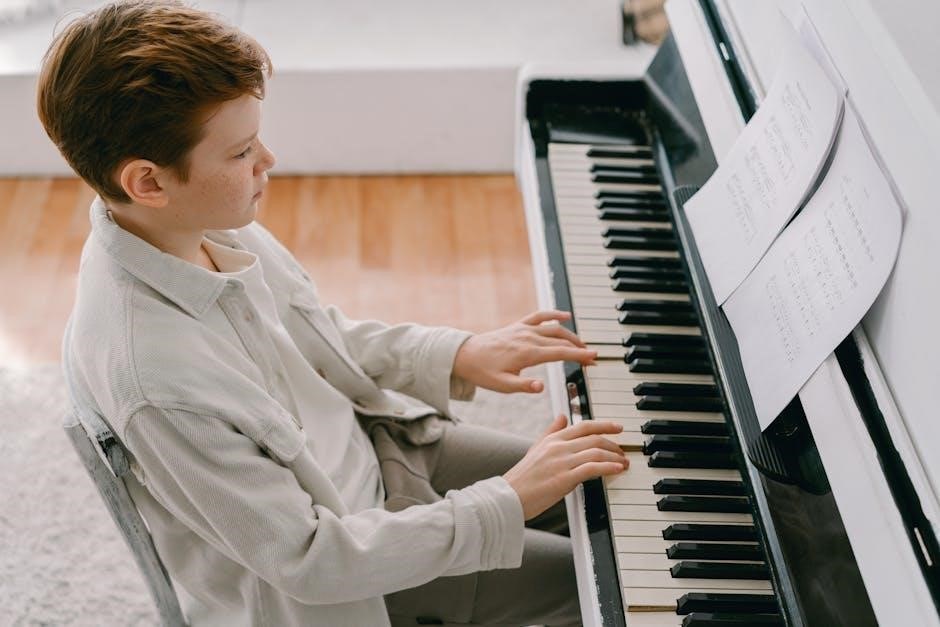
MIDI Files and Interactive Sheet Music
Rush E MIDI files offer a dynamic alternative to PDFs, enabling playback and tempo adjustments for practice. However, they lack the visual clarity of sheet music. Interactive sheet music platforms present a superior learning experience, synchronizing playback with scrolling notation.
These platforms often feature adjustable difficulty levels and looping functions, ideal for mastering challenging sections. They provide a visual and auditory learning environment, surpassing the limitations of static PDFs or basic MIDI playback, enhancing comprehension and skill development.
Video Tutorials and Piano Roll Formats
Rush E learners benefit greatly from video tutorials, offering visual guidance on fingering and technique. These resources demonstrate the piece’s nuances, complementing sheet music or MIDI files. Piano roll formats, often found in Digital Audio Workstations (DAWs), visually represent the notes as blocks.
This format aids in understanding the song’s structure and identifying patterns. While not traditional sheet music, piano roll views can be helpful for visual learners. Combining these resources—video, piano roll, and sheet music—provides a comprehensive learning approach.